

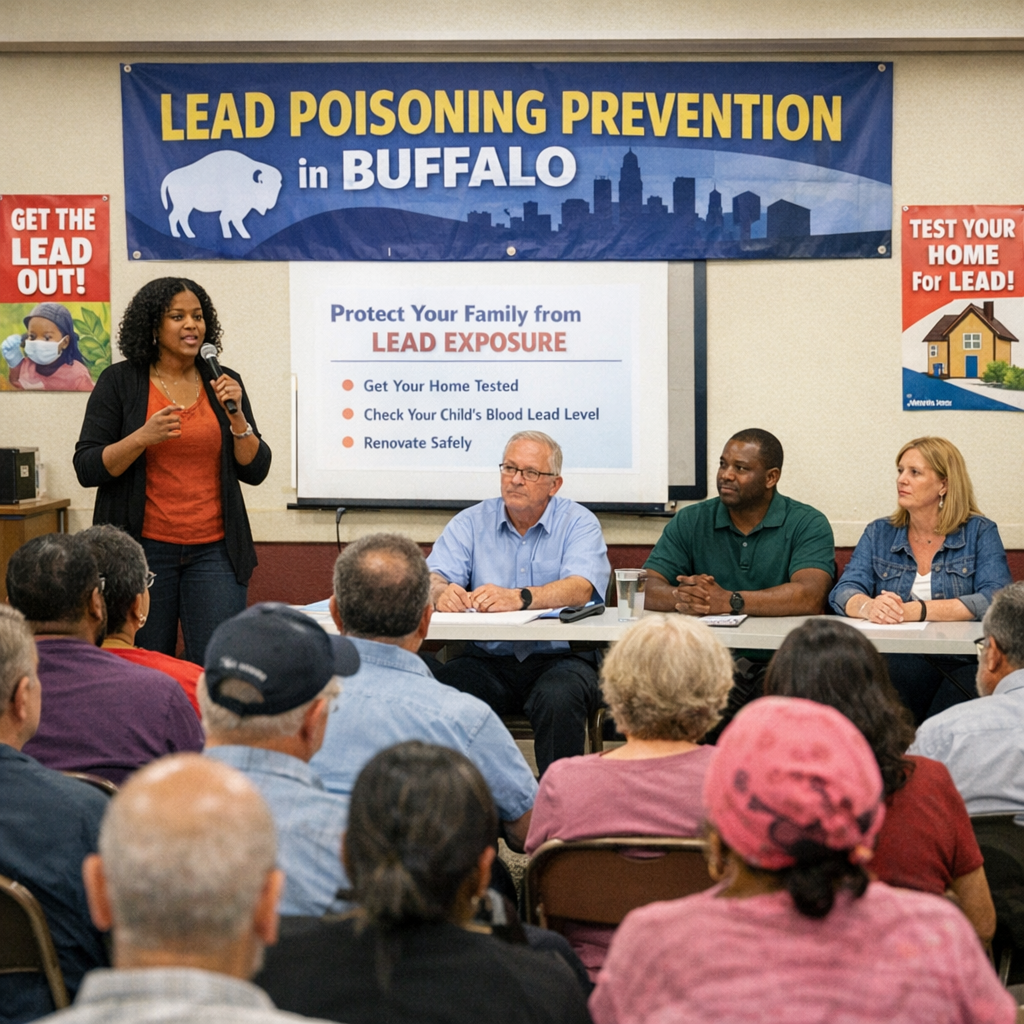
Buffalo continues to grapple with a significant public health challenge: lead poisoning. This issue predominantly impacts children in low-income areas, where older housing stock often contains lead-based paint. Despite efforts to mitigate this hazard, progress has been slow, raising concerns among residents and health advocates.
Current Challenges
In 2021, the City of Buffalo was awarded a $2 million grant aimed at lead remediation. However, as of early 2026, only a fraction of the targeted residences have been addressed, with just 18 out of 110 homes receiving necessary interventions. This sluggish pace has drawn criticism from state lawmakers and community members alike. Breana Hargrave, who suffered from lead poisoning as a child, expressed her disappointment, stating, “It saddens me because you would think that something that big and extreme would be gone by now.”
Community Efforts
Local organizations have been at the forefront of combating lead poisoning. The Community Foundation for Greater Buffalo, in collaboration with the City of Buffalo, Erie County, and the Buffalo and Erie County Lead Safe Task Force, has been working to protect children from lead exposure. Their 2018 Lead Action Report highlighted that approximately 80% of Buffalo’s children with elevated blood lead levels reside in rental properties built before 1978, underscoring the need for targeted interventions in these high-risk areas.
Moving Forward
Addressing lead poisoning in Buffalo requires a multifaceted approach. Enhancing the efficiency of fund utilization, increasing public awareness, and enforcing housing codes are critical steps. Community engagement and sustained advocacy are essential to ensure that all children in Buffalo have the opportunity to grow up in safe, lead-free environments.