

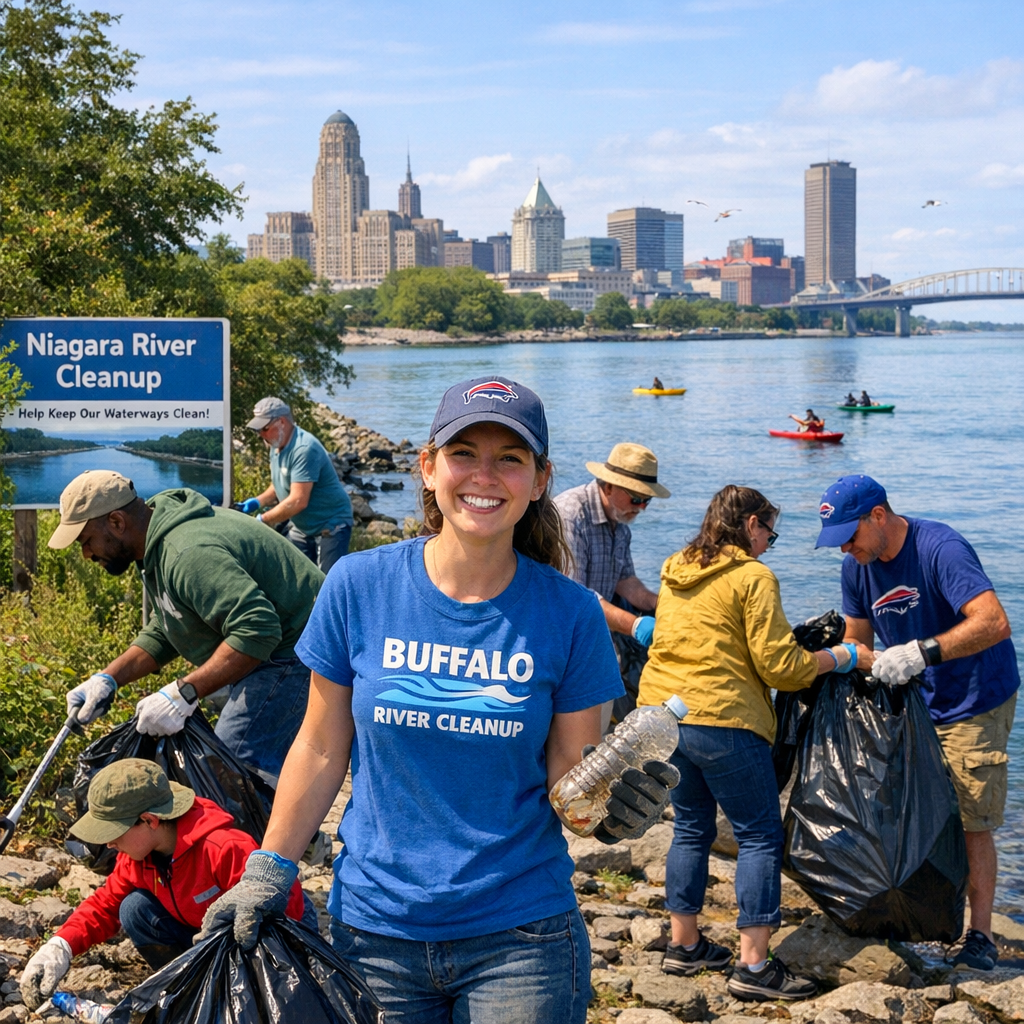
Buffalo, New York, is actively engaging in environmental initiatives to enhance sustainability and resilience. The city’s Division of Environmental Affairs oversees various programs, including the assessment and remediation of brownfields, and advises city departments on environmental issues. Residents can contact the division at 65 Niagara Square, Room 901, Buffalo, NY 14202, or by phone at 716-851-5406.
In 2023, Buffalo launched a Climate Resiliency Planning initiative, funded by a $220,000 grant from the New York State Department of Environmental Conservation’s Climate Smart Communities program. This effort aims to develop resources such as a Vulnerability Assessment and Climate Action and Adaptation Plans, guiding the city’s path toward a greener and more sustainable future.
To address organic waste, the city introduced a curbside composting pilot program in fall 2023. Open to 2,000 households, this program seeks to reduce food waste, which accounts for approximately 20% of greenhouse gas emissions in New York State. Participants can learn more and sign up through the 34 & More program website.
Buffalo Niagara Waterkeeper has launched a $1.6 million grant program, funded by the U.S. Environmental Protection Agency’s Great Lakes Restoration Initiative. This program supports community projects addressing invasive species, habitat restoration, and nonpoint source water pollution, with grants ranging from $25,000 to $500,000.
In April 2024, the University at Buffalo received nearly $500,000 from the EPA to deploy air pollution sensors in underserved African American communities. This project aims to develop a community-specific air quality prediction model, integrating new measurements with existing data to better understand and address local air quality issues.
These initiatives reflect Buffalo’s commitment to environmental stewardship and community engagement, fostering a more sustainable and resilient city for all residents.